Categories
Fitness and Health Mealtime Monday

Intermittent Fasting Lowdown

My Full Disclosure Policy

Intermittent Fasting has been pivotal in my weight loss

I have a confession I haven’t been 100% forthright in my weight loss journey.  For about ten months I have been intermittent fasting.  When people ask me how I lost 70 lbs, I always say it was through Pray, Eat Well and Exercise. It never occurred to me that Intermittent fasting had something to do with it too but looking back it probably has helped me tremendously.  It wasn’t until I was talking to someone about how I intermittent fast and she said, “Well, De that sounds like your secret formula.” I never thought of it like that because at this point it’s second nature I have been doing it for almost a year now.  

Intermittent Fasting is an eating pattern that alternates through fasting and feasting periods.  Fasting has been practiced since Biblical days and now modern day science can give you a definition of the benefits of this longtime practice.  It is also prevalent in the Fitness and Health Industry, and now there is a resurgence of people fasting other than for Biblical purposes.

According to the National Institute of Health, there are so many benefits to fasting:

  • Reduces inflammation. Inflammation can have some adverse effects on the body. It’s the way your body responds to outside threats like stress, infection, or toxic chemicals. An overreaction can cause your body to “fight” itself which can lead to chronic diseases among other things.  Fasting has been
  • Optimize energy metabolism- your body uses what it has more efficiently during fasting.
  • Bolster brain function.  According to a National Institute of Health Study, “The behavioral responses to Intermittent Fasting are associated with increased synaptic plasticity and increased the production of new neurons from neural stem cells” (Lee et al., 2002). Meaning your brain sends signal better and creates new signals more often.
  • Protects against diabetes, cancers, heart disease there has been studies that intermittent fasting during chemotherapy has helped reduce the toxicity levels in cancer patients and improving they’re well during treatment. (Lee et al., 2012).
  • Protects against neurodegeneration (such as Alzheimer’s). When you are fasting your body will utilize fatty acids for energy; meanwhile, your brain is using ketone, amino acids, and other free fatty acids. Studies show that “a human can survive for 30 or more days in the absence of food.”  It has also been hypothesized that the process of Ketolysis that happens during prolonged fasting has had improved the aging process and had a positive effect on mice with Alzheimer’s disease.
  • Reduces obesity, hypertension, asthma and rheumatoid arthritis.
  • Fasting has the potential to delay aging 

How I do it?

You’re going to find a lot of different methods.  Everyone has the secret sauce but if you do your research, follow common sense you can fast too.  Three methods of intermittent fasting can be found with lots of different names and variations, but I will give you the fundamentals.

There is the controversial 5:2 Method: Where you eat your calorie regimen for five days but two days consecutively you eat 500-600 calorie.

There is the 16/8 Method:  This method was popularized by Leangains and has been called “Leangains protocol”; You do a 16 hour fast and then an 8-hour feast or eating period.

There is the Eat-Stop-Eat Method: This is when you feast you fast for 24 hours 1-2 times per week.  It’s usually dinner to dinner, so you have overnight, but it’s still hard to withstand from food for 24 hours.

I do a combination of the 12/16/8 method and Eat Stop Eat Method.  It sounds very confusing but like anything, once you’ve been doing it for so long becomes second nature.  I do a 12 hour fast daily; kitchen curfew is 8:30 pm (which is late) and then the I don’t resume eating till after 8:30 am.  On arm days I typically do a 16 hour fast I will do kitchen curfew at 8:30 pm and then begin eating the next day at 12:30p.  On Sunday’s I usually do a stop to eat.  From Saturday dinner time to Sunday dinner time I fast. I’m not going to lie at; first, it was crazy hard, but now I don’t have an appetite until dinner Sunday.  I don’t usually do anything other than Church and nap. It’s a beautiful day to relax, fast and worship.

Why I do it? How

When I fast I feel better and I have more energy. I am not snacking all day, and it’s easier to hit my macros in my 8-12 hour feasting span. I plan fewer meals, and they are more massive and more nutrient dense to get all that I need.  Having lots of small meals has me in the mindset of continually nibbling, and I need to sit and eat meals if not I end up biting more than I intended. It helps to boost my metabolism as well while I am eating for my goals.  I have found it very useful in my weight loss journey and contribute it to my belly fat loss as well.

Should you do it?

If you are currently underweight or have a history of eating disorders, I would not recommend fasting.  If you want to try another approach at your nutrition and the way you eat I would try it for a week and see if it makes a difference.  Try it longer to have a lasting effect.  It’s really up to you, but I would inform myself before “joining a challenge.” The most adverse side effect of intermittent fasting is hunger.  Other than that it is beneficial unless you have a preexisting condition that prolonged fasting would effect such as diabetes.  With any nutrition program, you should consult your doctor first. Also, intermittent fasting is not going to replace getting prayer, rest, exercise and eating nutrient-dense food.  This is in addition to your existing exercise routine.

Where do you begin?

Begin with a 12 hour fast for at least three days a week and graduate as it gets easier.  Nothing crazy stop eating at a specific time every night and don’t begin again until 12 hours later.  I would also encourage you to drink up your water during this time it will help you with cravings and meet your hydration needs.  It’s that simple. The more complicated it, the less efficiently it is adapted.  You’ll know when you’re ready to try other methods of intermittent fasting.

Some basic considerations:

  • While fasting it is okay to drink, water, coffee, tea, and no sugar beverages.  I like to start my days off with BulletProof coffee which is Organic Coffee, 1 Tbsp. Coconut Oil, 1 Scoop of Vital Proteins Collagen and a little Cinnamon or Chai Spice Mix I don’t do Protein Shakes, Meal Supplements or Dairy Products while fasting
  • I thought breakfast is the most important meal of the day and it should not be skipped.  Breakfast is essential, but the positive effects of fasting on your body supersede the impact of well-balanced lunch.
  • Should I take supplements or medications while fasting? Most supplements and medications recommend consuming with a meal because they are fat-soluble. Of course, consult a physician, but you should probably wait until you resume eating to take your supplements and medications.
  • If you workout early in the morning and concerned about fasted workouts they are found.  There has been lots of research on the benefits of a fasted exercise.  I also recommend Branch Chain Amino Acids or BCAAs to drink before or during your workout.
  • I don’t want to lose my muscle gains.  Muscle gains are from proper protein intake.  During your feasting time, you should be making sure you are getting the appropriate amount of protein to nurture muscle growth and prevent loss. There have been studies that intermittent fasting will result in less muscle loss than if you restrict your caloric intake.
  • I don’t want to get Metabolic Damage from fasting and slow down my metabolism.  GRR!  Another lack of research that is going around I’m not sure if it’s to scare women or people don’t check their facts but short term quick boost metabolism.  It’s fasting for long periods of over three days that can cause damage and a suppressed metabolism.

Have you ever intermittent fasted?


Categories
Faith & Self Care

Freeing Yourself from a Dieters Mentality

My Full Disclosure Policy

I am an affiliate for Nutrient Based Eating program. I receive a commission for anyone who purchase the program through my link.  That in no way effects my opinion.

I am so excited to have my FaithFit friend Amanda Wright on the blog today! Amanda is a faithful women like myself who also is driven to show others how to honor her temple. I am so honored to have her on the blog today!

Crazy Prayers!

What’s the craziest prayer you’ve ever prayed?  I don’t mean crazy in the sense that you were praying with bold faith for Kingdom values we know our Father has prepared for us.

I was thinking more along the lines of pretty self-serving, incredibly shallow, and well…crazy!

Mine is a prayer I prayed quite often for the decades of life that I was living under the burden of being a “dieter” and pretty obsessive about my food, eating, and body.

My crazy prayer would always be, “Lord, can you help me not gain weight from this excessive amount of (fill in the blank) that I’m about to eat (or, let’s face it, was already in the middle of eating.)”

Note, it was NOT a prayer asking for His strength to help me stop eating, nor was it a prayer of blessing and thanksgiving for such a treat or meal.  Oh no, it was always out of FEAR that my compulsive eating or drinking would make be fat.

Funny, but I can’t remember one time that my loving Father answered this prayer.  Every time I over-indulged, my body wore that decision.

Guilty Indulgence

Then I would feel guilty and condemned for letting my eating get to so out of control.  So then I would over-compensate for that guilt by overhauling my eating on some diet or clean eating regimen for as long as my willpower held out.

But sure enough, my cravings would come back with a vengeance, and I would set my sights on some new over-indulgence and the cycle would start all over again.

Jesus Girl Dilemma’s

This is a dieters dilemma for the faith-based girl.

So, allow me to officially introduce myself.  I’m Amanda Wright, founder of my business A. Wright Fit.  I am a certified nutritionist and certified strength and conditioning specialist (CSCS) and I teach women the tools to grow STRONGher in her body, WISEher in her mindset all by living more SURRENDhered to Jesus!

So, I am a fit-faith friend of our girl De, and have been passionately following her amazing transformation journey and am in AWE of her discipline and motivating presence in this world.

De and I have been chatting about nutrition and the struggle that we ourselves have experienced along with the struggle we see so many of our friends and clients face with regards to our eating and our relationship with food.

We see that there are problems with the “diet mentality” for women of Faith.

There is a beautiful quote by Elisabeth Elliot that said, “We cannot give our hearts to God and keep our bodies for ourselves.”  So much truth to that!

Surrender is not to be selective.

And in my crazy prayer I shared with you above, I was certainly being selective in what I gave God reign over and I see a lot of my faithful friends still doing that as well

So, I wanted to share 3 problems that I see with this diet-driven society, and also give you a chance to embark on a new journey with me (and De) to transform your nutrition with my Nutrient Based Eating lifestyle based program for women.
Problem #1:  We are commanded by Jesus to “not worry about out eating or our drinking.”

““Therefore I tell you, do not worry about your life, what you will eat or drink; or about your body, what you will wear. Is not life more than food, and the body more than clothes? “ Matt 6:25

When we “worry” over anything, even something as good as getting good nutrition, we are, as Rick Warren says,  “acting like practical atheists.” You take on God’s role when you think that by worrying about something, you actually have power of it.  We think that when we “worry” about something that we are proving that we care.  But that is not true.  Worry is based out of fear, and fear opposes love and all that God is.

Your Solution:  There is a way to CARE about your eating without worrying and that is to step into the love of what you’re after.  Instead of “worrying” about every detail of your food, you will simply take on an attitude of doing your best to build good habits and then surrender the rest.

Let’s be clear, we do need to care, so don’t mistake this advice as though you need to shut off all consideration for what you’re eating.  We must care because our body is a gift from God that we are called to steward well.   We must simply draw the line on the emotional power we allow our food choices to have over us.


Problem #2:  We follow “her” instead of Him.

“Do not follow the pattern of this world but be transformed by the renewing of your mind.” Romans 12:2

Often we get caught following our girlfriends more than we follow God’s call on our lives.  This is not necessarily bad, especially when God sends good women to help teach us, but we have to be able to discern what is a pattern of the world that belongs to the world versus a pattern of the Kingdom that is worthy of our practice.

Just because your girlfriend claims that she saw such fast results taking her supplement program or going vegan does not mean that that program is right for you or your body type.

In my coaching, I have come to realize that I cannot be a hero for my clients.  I cannot give them the “magic fix” by telling them exactly what to eat.  I have to teach her how to take personal responsibility for her own body and investigate what foods work best for her own metabolism, tastes, and body systems.

We are all uniquely made! God will guide you in the process of self-discovery.  Own it!

Problem #3:   Practices that use only our “willpower” limit our “Godpower.”

So many women think the only option to change her eating is to take an “all-or-nothing” approach to her eating and completely overhaul everything at once.

Anytime you try to make several changes at once, you are by default relying on your willpower to sustain your efforts.  Habits are very challenging to make stick in our busy brains (Dr. Caroline Leaf shows it takes about 63-days for just ONE habit), so multitasking all these changes at once creates overload and eventually breaks down.

Ultimately this is a fleshy response, trying to use our own will to transform us.  And we know that anytime we are acting in the flesh we are opposing the Spirit within us. (Galatians 5:17)

Your Solution:  Instead of overhauling your eating, consider making just ONE habit in the right direction and allow God to show you what this may look like…which may just include a little guidance from yours truly.
If you are in need of some faith-based wisdom on what nutritional habits to follow in order to improve your lifestyle based approach to healthy eating, I would love to welcome you to the Nutrient Based Eating habit-based program for lean lifestyles and thriving energy!

The NBE is a eBook and video eCourse that guides you step-by-step through 3 important areas in your nutrition.

Section I:  Education— In the book I teach you the incredible power of having a “nutrient” focus on your eating instead of a “calorie” focus.  I teach you what holistic eating is and why it is the single best decision you can make for your eating!  You have a full guide on the essential vitamins and minerals and where to find them in your food.

Section II:  Application— Here I take you through the 5 PHASES of Nutrient Based Eating progression.  Using plate graphics and hand-measuring tools I guide you through the building of 17+ solid nutritional habits that will keep you progressing!

I give you printable tools like my “NBE Habit Formula Tracker” to help you hold yourself accountable and the “Assessment Protocol” to help you determine what is working for you and what needs to be tweaked.

Section III:  Maintenance— where other programs might leave you hanging here, I help you prepare for this phase once you reach your goal by teaching you the “mindset of maintenance” along with the reverse-habit protocol you can take to ensure the lifelong maintenance.

When you join, you will receive 6-eCourse videos that teach you the NBE lifestyle in full.  I will also add you to the private Facebook NBE group and portal to be in community with fellow fit-faith women who are in this journey with you!  You’ll receive daily encouragement, accountability and coaching that will help you stay CONSISTENT!

For more information or to purchase, click here.  But be aware, the opportunity to purchase only lasts until Friday, March 3 at midnight!  So, feel free to reach out to me or De with any questions!

TELL ME MORE ABOUT NUTRIENT BASED EATING

“Amanda Wright is a Jesus-girl, a certified nutritionist and Certified Strength and

Conditioning Specialist (CSCS). She is owner of the fit and faith-based women’s

health coaching practice, called A. Wright Fit, where she teaches women to grow

STRONG’her in body, WISE’her in mindset all by living more SURREND’hered to

Jesus.

She is madly in love with her husband of just 2-years, Howard, and stepmom to

Alyssa and Eden. She and Howard reside in California in the Silicon Valley area. She

loves to exercise (obvi), hike, read and is also incredibly lucky to travel the world

with her husband for his current role in corporate America.


Categories
Fitness Fitness and Health Mealtime Monday

What’s the deal with Macro Counting?

Meal Time Monday [Autosaved]

calculating-macros

I have been counting macro’s for a while now about 6 months and it has made a world of difference in my diet.  I also recently just passed my nutrition class at school so that makes me an authority on macro’s, right? Nope, but I am going to let you in on my notes from my personal research.

Macro’s?

According to my textbook Visualizing Nutrition Everyday Choices, macros are “Carbohydrates, lipids (aka fats. Proteins, and water.” I am not including alcohol although it is a macro it is not a nutrient required to live. It does contain calories which is why it is a macro but let’s try to keep it out of our count.  These are all considered macronutrients and what we need in large amounts. There are also micronutrients which are vitamins and minerals and we only need a little that is why they are micro. 

 So, when someone is counting macro’s they are measuring their Carbohydrate, Fat, and Protein.

carbohydrates

 Let’s tackle that monster first!  Should I eat them? Shouldn’t I? Please do eat Carbs. The purpose of Carbohydrates are to fuel our bodies with energy.  They are stored in the liver, brain, blood and muscles as glycogen.  You can get carbohydrates from: Starches, sugars and fiber.

 You can get carbohydrates from:

  • Fruit
  • Vegetables
  • Grains
  • Oatmeal
  • Steel Cut Oats
  • Sweet Potatoes/Yams
  • Brown Rice
  • White Rice
  • Whole Wheat Bread
  • Ezekiel bread
  • Cream Of Wheat
  • Cream of Rice

You can also get them from processed foods and drinks but since you’re trying to make healthier choices stick to Whole foods.

 How much is enough?

We all are different, Thank God.  It can range from zero-700 grams per day.  The daily recommendation 130 grams of carb per day. If you are counting macro’s I would go to a macro calculator. When taking into account your macro numbers there is usually activity level, body weight, body fat percentages and goals.

A range that I saw consistently was .5-2 grams per pound of lean body mass.  Lean body mass everything (including organs, blood, bones, muscle and skin) that is not body fat.

 Body-Fat = Lean Body Mass

The Lean Body Mass Formula:

Body Weight- (Body Weight x Body Fat Percentage) = Lean Body Mass

Or you can use an automatic calculator.

Before we go back to Macro’s, Lean Body Mass is a good thing to know.  It will help you to track changes that you have in your Body Fat versus whether the scale decides to behave or not it can give you a more accurate idea of weight loss! It also helps to make sure you are just losing your fat and not muscle too!

Protein assist you in building muscles if consumed correctly it can also prevent muscle loss if you have a calorie deficit.  Protein has also been linked to controlling appetite and helps keep you full longer better than fats and carbohydrates do.  Another thing about protein is that it requires a lot more energy to digest than other macro nutrients.  It has been said that protein is a good example of effective calorie burning gram for gram.  That is why a lot of high-protein diets have been associated with better fat loss.

You can get your protein from both vegetables and/or animal sources:

  • Egg
  • Skinless Chicken Breast or Cutlets
  • Lean Turkey
  • Top Round
  • Steak Filet Mignon
  • Fish
  • Beef
  • Cottage Cheese
  • Pork Tenderloin
  • Wild Sea Bass Wild Swordfish

Vegetable Sources:

  • Chia
  • Hemp Seed
  • Soy
  • Seitan
  • Quinoa

How much is enough?

Again, this is all dependent on YOU! Your weight, body fat percentage and goals need to be accounted.

A consistent range that I found was .5 grams-2 grams per pound of lean body mass.

According to Authority Nutrition, “The DRI (Dietary Reference Intake) is 0.8 grams of protein per kilogram of body weight, or 0.36 grams per pound. This amounts to: 56 grams per day for the average sedentary man. 46 grams per day for the average sedentary woman.”

Example:

You weigh 140 lbs. and you are at 25% body fat, your lean body mass will be

140 – (140*25%) = 140-32.50 = 107.5 is your Lean body Mass what is left AFTER the body fat.

108 x .5 g of protein = 54 grams of protein. If you planned on consuming .5 grams of protein per day for your goals. That is why with macro’s-goals matters!

 fats

Fat?

Despite the low-fat nonsense you see in the store. Fat can be good! Say what? Yep, we absolutely need fat to survive it helps us with vitamin absorption, hormones and their regulation, keeps our brain functioning properly among some of the things which are pretty important.

How much is enough?

Always asking this question, huh? Well we all know too much is too much but how much is enough? Good question but guess what that depends on? Yep, you got it your body wright, body fat percentage and your goals.

A consistent range is 15-45% or .35-.7 grams per pound of lean body mass. That can be calculated just like the protein.

Although, a lot of people give that range. According to Health.gov, you should strive for “a total fat intake of no more than 30 percent of calories, as recommended in previous editions of the Guidelines”

You can get good sources of fat and poor just like any other macro nutrient.

My suggestion:

  • Olive Oil
  • Flaxseed Oil
  • Fish Oil
  • Almond Butter/
  • Cashew Butter
  • Almonds
  • Pecans
  • Walnuts
  • Cashews
  • Natural Peanut Butter
  • Avocados

What does all this mean?

When someone is counting their macro’s they are tracking the Protein, Carbohydrates, and Fats they eat in a day versus calories. Now each macro nutrient has caloric value but we’re not going to get into that.

macroscalorievalue

When counting your macros as long as you focus on the grams of macro nutrients and use an amount according to your goals. With the information from a nutrition label instead of counting calories you can create your Macros:

counting-macros-from-a-nutrition-label

For Example:

This is an example of how although you are counting macro’s it still equals your calories. Why? Calories are the amount of energy food gives you. Macronutrients are where the calories come from they are the nutrients that give you energy.

Is there any other things that need to be counted when calculating macro’s? No!

NOT:

·         Saturated Fat

·         Cholesterol

·         Sodium

·         Dietary Fibers

·         Sugars

·         Added Sugars

·         All the Vitamins, Calcium, Iron and Potassium are Micro nutrients so, not these either.

What do I do if it doesn’t have a label?

Google it! My Fitness Pal it, get a really educated idea of the macros in your apple, chicken breast, or baked potato.  Gift of modern day technology. You can track everything on My Fitness Pal if you like.  I just wanted to break it down so you understand what the macro’s look like and are coming from.

countingmacronutrients

Still concerned? Or, Ready to try?

For those who are still concern I will address a few issues I had at first!

This seems complicated why not just track my calories? Macro tracking or counting helps you make sure that the weight that your losing is not the muscle you have worked so hard to gain, you aren’t having hormonal issues because you’re consuming adequate amounts of fat, you performance won’t suffer because although you are reducing calories do you know if you’re getting the adequate amount of carbohydrates to fuel your workout?

You can remain counting calories but if you’re looking to improve your health and maintain your muscle definition and work to your bodies best ability because it is fueled with the adequate macro nutrients for today. It’ s really up to you I say at least give it a try!


Do you use macro’s? Have you heard of counting macro’s ?

References
Grosvenor, Mary B. Visualizing Nutrition Everyday Choices. 2nd ed. Hoboken: Wiley Visualizing, 2012. Print.
http://www.fda.gov/Food/GuidanceRegulation/GuidanceDocument sRegulatoryInformation/LabelingNutrition/ucm385663.htm http://www8.nationalacademies.org/onpinews/newsitem.aspx?Rec ordID=10490 http://www.nationalacademies.org/hmd/Reports/2004/DietaryReference-Intakes-Water-Potassium-Sodium-Chloride-andSulfate.aspx


Categories
Mealtime Monday Recipes

Popcorn Indulgence, that’s good!

Meal Time Monday [Autosaved]

popcornindulgence


My Not-So Guilty Pleasure

If you were to ask me what my favorite food was, I would say without hesitation pizza and sushi. The third thing that I cannot resist is popcorn. It is the most satisfying tasty snack that you can chomp on for awhile and fill full, and craving quenched.

I love air popped popcorn, but it’s a hassle to take out the air popper and make popcorn. I also have a really old Air Popper from 1990s that I am almost positive was made with phthalate, BPA plastic and probably not safe to use any longer. A little trick I learned from my mom to get air popped popcorn without the hassle of an air popper. It is a much healthier option to microwave popcorn too. It is a two step process but if you like popcorn the fresh no preservative microwavable popcorn option can be a treat.I also like how you can make so many different topping ideas. The only problem with popcorn is that it can turn from a healthy beneficial snack to junk food right before your eyes.

Why is it the Healthy Snack?

According to the National Healthy and Nutrition Examination Survey results, “reported that popcorn eaters consumed an average of 250 percent more whole grains than non-popcorn eaters.”

Some other benefits of popcorn are:

  • Great source of fiber.
  • Lower risk of cardiovascular disease
  • reduce blood cholesterol
  • help regulate blood sugar,
  • B vitamins,
  • minerals,
  • protein
  • and antioxidants
  • hulled corn contains high concentration of polyphenols

popcorn

What is this polyphenol everyone is talking about?

The word itself sounds technical, inorganic and “chemically.” It is anything but and something that we should be adding more to our diet. According to the American Journal of Clinical Nutrition, “Polyphenols are abundant micronutrients in our diet, and evidence for their role in the prevention of degenerative diseases such as cancer and cardiovascular diseases is emerging.” Polyphenols have some great benefits for your health depending on the amount and classification that you eat.

  1. Lowers your cholesterol
  2. Lowers your blood pressure
  3. Improves your artery (endothelial) function
  4. Improves your arterial flexibility- which means, keep arteries flexible and elastic to help blood flow through freely
  5. Reduces your inflammation
  6. Improves your life span

How much polyphenols should intake daily?

According to the Journal of Nutrition, there was a study conducted that found people who consumed 650 mg per day experienced 30% lower mortality rate than those who took less than 500 mg per day.  It’s not an exact prescription, but it gives you an idea of a good range.

Where can I get polyphenols in my diet?

You can easily get your polyphenols from Whole nutrient-dense food there are over 100 foods found in nature that contain polyphenols. Having a diet that consists of super foods helps too.  Add I found an extensive list on the European Journal of Clinical Nutrition which includes the food, food groups, types of polyphenol and different amounts for each type.  I picked the ones that I like to eat because it is good to know I’m doing something right.

  • Corn
  • Cocoa powder
  • Dark chocolate
  • Flaxseed meal
  • Sage, Rosemary, Spearmint, Thyme, Capers, Basil, Curry, Mexican oregano (Grouping them all in one)
  • strawberries
  • coffee
  • Pecan nut
  • Black grape
  • almonds
  • red onion
  • apple
  • spinach
  • Green tea
  • And over a 100 more

popcorntoppings


Air Popped Popcorn with No Popcorn Machine Needed

So, yay for popcorn!!! I eat it so much and I have a really cool and easy way to make yours!

[amd-yrecipe-recipe:39]


Categories
Fitness Fitness and Health Weightloss Journey

My Body on a Carb Cycle

disclosure

My Full Disclosure Policy

FaithFueledfRIDAY

Carb Cycling, some consider it a Diet Fad others consider it a weight loss secret and some see it for Body Builders and Bikini Competitors.  When I first heard of it I totally dismissed it because to take away my carbs seemed like cruel and unusual punishment.  After trying it I am considering adopting it as a new lifestyle change.  As you know I am apart of a workout program called Beyond Fit Life  with the workout and my own workout routines. I have been able to lose over 55 pounds in less than 10 months.  I even came to a point where I had plateaued which is when I incorporated my own workout routines and began to see progress again.  Then, I got to the point where I was starting to see results but I really wanted to make a huge difference and impact on my body. Around that time Carb Cycling was reintroduced to me. So, I tried it and the results that I found was nothing less than amazing but were they sustainable?

What is Carb Cycling?

A very basic definition of carb cycling is a meal/nutrition plan that is based on your carbohydrate intake.  It is usually used to prevent a fat loss plateau and maintain a functional metabolism. It is an addition to a workout or exercise program not an lieu of a workout performance.  What? Basically you alter how many carbs you eat from day to day. So, an example of a Carb Cycle meal plan may be:

Monday-No Carbs

Tuesday-Low Carbs

Wednesday-Low Carbs

Thursday-No Carbs

Friday-High Carbs

Saturday- Low Carbs

Sunday- No Carbs

It can be repeated for several weeks, the schedule varying from week to week.

So week 2:

Monday-Low Carb

Tuesday-Low Carb

Wednesday-No Carb

Thursday- No Carb

Friday-Low Carb

Saturday-High Carb

Sunday-No Carb

Is their a methodology to the No Carb, Low Carb, High Carb days. Some would say yes and others would say no.  I did variations every week to see if it produced greater results.  One week I would intentionally schedule my no carb days on a HIIT workout day and a Low Carb day on a Sprint day.  Did I see greater inches or weight loss than the week that I did No Carbs on Rest Days and Low Carb on Workout days.  I did but it was very little difference less than 2 inch loss or pound weight loss.  From my own experience I would say no the days do not matter. How your body feels is the most important thing and what you are eating to fuel your body optimally.

I encountered a “Certified Nutritionist,” (which after looking at her credentials she paid $200 for a online certification so that she could call herself a Certified Nutritionist.)  I was in a facebook group and she was telling us of the dangers of Carb Cycling. She claimed that Carb Cycling resulted in Ketonic Failure and Carb Cycling caused your body refuel on muscle.  She said it was very dangerous, did not have sustainable results and was basically “a dumb way to eat”.  Now, these were very serious accusations for someone who had minimal qualifications to diagnose anyone with any type of disease or disorder. I am currently studying and getting my certification for Fitness and Weight loss nutrition and a self proclaimed fitness and nutrition geek. I like to do research on most things that I come across. Whether it be the Bible, Workouts, or Food I am going to take more than someone’s opinion for face value. That’s just me! I had to breakdown some of her fancy scare tactics.

Ketosis– is a normal metabolic process that your bodies goes through when it has lower levels of glucose or carbohydrates to process.  When your body doesn’t have enough carbohydrates to burn energy it starts to burn fat.  Then, and only then if it does not have enough fat then it will start working on your lean muscle.  It is normal for your body to make keotones and to use them accordingly.  Ketosis, usually does not take place in the body until you have eaten less than 50 grams of Carbohydrates for 3 to 4 days.  Ketosis is also know to help\ you to feel less hungry and also helps you maintain muscles.  All of this is dependent on if you are “Normal” don’t suffer from diabetes, dehydrated or have high levels of lead in your system. Ketogenic and low carbs diets are also used to treat a number of disorders and diseases.  With that being said, I have found that Carb Cycling done correctly can be a great way to lose weight but is it sustainable?

What did I eat?

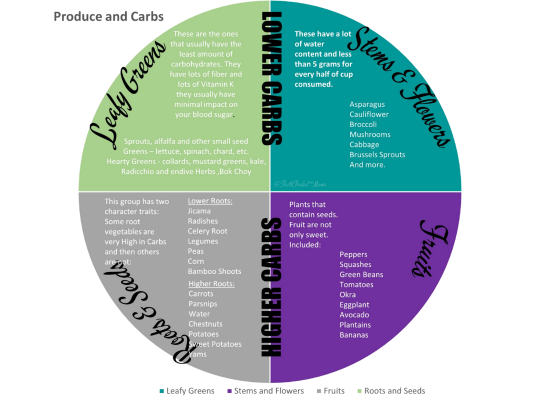
I was really anxious before my first week. I overthought my meal plan and didn’t think I could withstand from Carbohydrates.  I also was overwhelmed with the list of produce that was High in Carbohydrates. Say what? Yes, produce contains carbohydrates its not just bread and pasta.  Similar to when I did the Sugar Detox and found that sugar is in almost everything. So are carbs.  They are found naturally in fruits and vegetables, some veggies and fruits have more than others but when trying to get under 50 grams of carbs per day. Those carbs cannot be taken for granted.


Vegetables with Carbs

I ate a lot of food. I was eating about every 2 hours meals that included lots of produce and lots of protein.  I also drank the recommended gallon of water to stay hydrated.  On No Carb days I drank Branch Chain Amino Acids (BCAAs) twice a day instead of one time. I ate well and was full and felt amazing while Carb Cycling especially on No Carb days. I carb cycled for three weeks out of the month and I ate really well each day. I think if I wasn’t able to eat well then the diet wouldn’t have lasted very long.

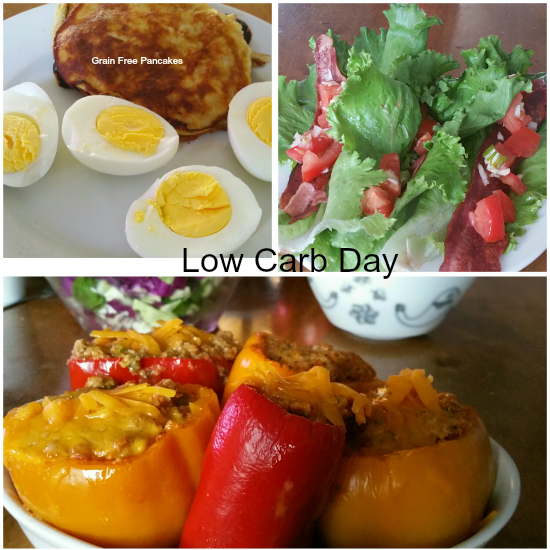
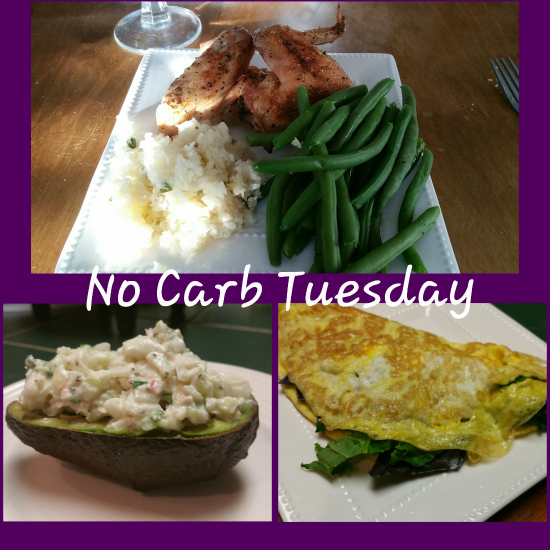
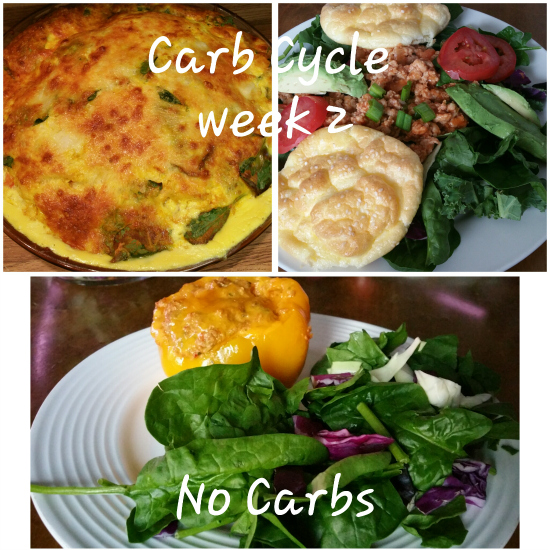
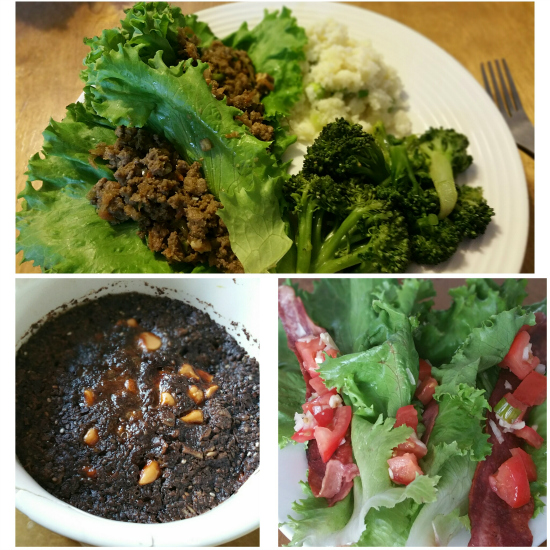
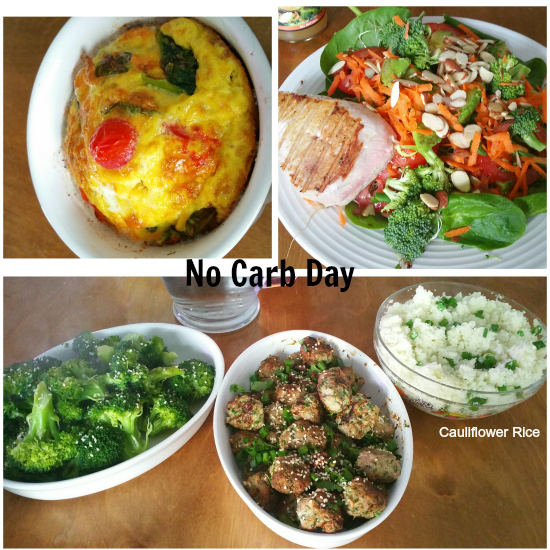
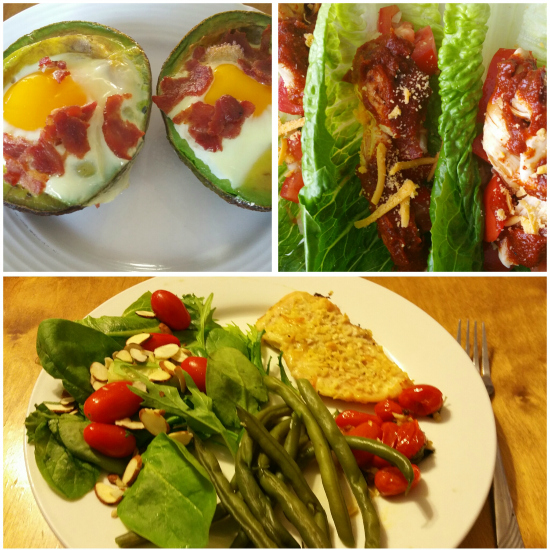
Here are 7 Carb Cycle Meals Days. I didn’t include the snacks but they were usually a Protein Shake in the afternoon and the morning would be a carb free snack that had high fat, protein and produce. Some favorites were Lettuce Roll-ups with Turkey, Fresh Salsa and Avocado, Apples/Celery with Peanut Butter, Hard Boiled Eggs, just to name a few.  I was able to stay full and carb or lower carb free all day long.

14622211856691459901292607 1460417326402 1460589751175 1462221068604 1462221117883

Did I get results?

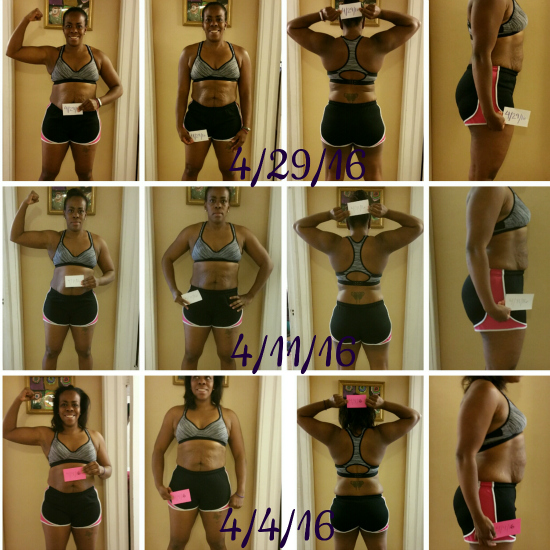
I had few fears when I was starting. That I would be hungry, have cravings, feel awful. I thought that it would be like the Sugar Detox and have some withdrawal symptoms.  I was pleasantly surprised. I was able to maintain the entire 21 days with only a carrot slip up on the first week (I could have done worse). I was full all the time, I did not have cravings, I had energy and felt amazing on it. I had really great physical results too. I would say that sacrificing for 21 days brought me great results but I don’t feel like I had to sacrifice anything. I lost over 13 inches (I rarely get on the scale but I am sure that I lost some pounds too).

I would definitely recommend this to someone trying to reach a goal quickly for example a wedding. It could also be a lifestyle change but it takes a lot of planning and prepping. I would have continued through the following month but I needed a break from the planning and the prepping. That was a key factor to my success with this.  I plan on doing it again starting next week but the last few weeks I wasn’t able to prep and plan and after two days of trying to wing it I had to put it on hold for a week. Some people do better without carbs and I am finding that I am one of them. I prefer how I felt without carbs to how I feel with them and think that I will be making this lifestyle change for myself this could possibly be a sustainable lifestyle change. With a little of the 80/20 rule like with all things!


Have you heard of carb cycling? Tried it?

1461926351237